биография гоголя на английском языке с переводом
Тема Биография Гоголя на английском языке, слова, диалоги, сочинение
Literature – [ˈlɪt.rə.tʃə]- литература
Writer – [ˈraɪ.tə]- писатель
Ukraine – [juːˈkreɪn]- Украина
Famous – [ˈfeɪ.məs]- известный
Abroad – [əˈbrɔːd]- за границей
Nikolay Gogol is a famous writer. Николай Гоголь-известный писатель.
Gogol was born in 1809. Гоголь был рожден в 1809.
Gogol spent a part of his life abroad, whre he wrote one of is the most famous works “Dead souls”. Гоголь провёл часть жизни за границей, где написал одну из его самых известных работ “Мёртвые души”.
“Dead souls” is a known book, which was translated into many languages.”Мёртвые души”-это известная книга, которая была переведена на многие языки.
Сочинение
Николай Васильевич Гоголь это мой любимый писатель. У меня дома много его произведений. Моя мама тоже любит читать его книги.
Гоголь смог много добиться в своей жизни и его книги популярны даже сегодня. Интерес к литературе у Гоголя появился еще в детстве.
Гоголь это талантливый человек. Я восхищаюсь его творчеством.
Перевод:
Nikolay Vasilyevich Gogol is my favorite writer. I have many his works at home. My mother also likes his books.
Gogol achieved much in life and his books are popular even nowadays. He was intrested in literature since childhood.
Gogol was a talanted person. I admire his creativity.
Диалог
– Have you read the “Dead souls”?
– I have, it’s my favorite book.
– Nikolay Gogol wrote it.
Перевод:
– Ты читал “Мёртвые души?”
– Я читал, это моя любимая книга.
После ознакомления с содержанием Топика ( Сочинения ) по теме » Знаменитые Люди » Советуем каждому из вас обратить внимание на дополнительные материалы. Большинство из наших топиков содержат дополнительные вопросы по тексту и наиболее интересные слова текста. Отвечая на не сложные вопросы по тексту вы сможете максимально осмыслить содержание Топика ( Сочинения ) и если вам необходимо написать собственное Сочинение по теме » Знаменитые Люди » у вас возникнет минимум сложностей.
Nikolai Gogol
Nikolai Gogol was born in Sorochintsi, Ukraine, and grew up on his parent’s country estate. His real surname was Ianovskii, but the writer’s grandfather had taken the name «Gogol» to claim a nobel Cossack ancestry. Gogol’s father was an educated and gifted man, who wrote plays, poems, and sketches.
Gogol started write while in high school. He attended Poltava boarding school (1819-1821) and Nezhyn high school (1821-1828). In 1829 he mowed to St. Petersburg. Gogol worked at minor governmental jobs and wrote occasionally for periodicals. Between the years 1831 and 1834 he taught history at the Patriotic Institute and worked as a private tutor.
In 1831, Gogol met Aleksander Pushkin who greatly influenced his choice of literary material, especially his «Dikan’ka Tales», which were based on Ukrainian folklore. Their friendship lasted until the great poet’s death. In 1835, Gogol became a full-time writer.
Under the title «Mirgorod» (1835) Gogol published a new collection of stories. The book included the famous historical tale «Taras Bulba», which showed the influence of Walter Scott. The protagonist is a strong, heroic character, not very typical for the author’s later cavalcade of bureaucrats, lunatics, swindlers, and losers.
«St. Petersburg Stories» (1835) examined disorders of mind and social relationships. «The Nose» was about a man who loses his nose and which tries to live its own life. In «Nevski Prospect» a talented artist falls in love with a tender poetic beauty who turns out to be a prostitute and commits suicide when his dreams are shattered. «The Diary of a Madman» asked why is it that «all the best things in life, they all go to the Equerries or the generals?» «The Overcoat» contrasted humility and meekness with the rudeness of the «important personage».
Gogol published in 1836 several stories in Pushkin’s journal «Sovremennik» and in the same year appeared his famous play, «The Inspector General». It told a simple tale of a young civil servant, Khlestakov, who finds himself stranded in a small provincial town. By mistake, he is taken by the local officials to be a government inspector, who is visiting their province incognito. Khlestakov happily adapts to his new role and exploits the situation, but then arrives the real inspector.
Its first stage production was in St. Petersburg, given in the presence of the tsar. The tsar, as he left his box after the premiere, dropped the comment: «Hmm, what a play! Gets at everyone, and most of all at me!» Gogol, who was always sensitive about reaction to his work, fled Russia for Western Europe. He visited Germany, Switzerland, and France and settled then in Rome. He also made a pilgrimage to Palestine in 1848.
In Rome Gogol wrote his major work, «The Dead Souls». Gogol claimed that the story was suggested by Pushkin in a conversation in 1835. It depicted the adventures Pavel Ivanovich Chichikov, who arrives in a provincial town to buy «dead souls», dead serfs. By selling these «souls» with a cheaply-bought lands, Chichikov planned to make a huge profit. He meets local landowners and departs in a hurry, when rumours start spread about him.
Except for short visits to Russia in 1839-1840 and 1841-1842, Gogol was abroad for twelve years. The first edition of Gogol’s collected works was published in 1842. It made him one of the most popular Russian writers. Two years before his return, Gogol had published «Selected Passages from Correspondence with Friends» (1847), in which he upheld the autocratic tsarist regime and the patriarchal Russian way of life. The book arose disappointment among radicals who had seen Gogol’s works as examples of social criticism. In the play «Marriage» (1842) nearly everybody lies and the protagonist cannot make up his mind about marriage. He hesitates, agrees, then withdraws his promise.
In his later life Gogol came under influence of a fanatical priest, Father Konstantinovskii, and burned sequels for «Dead Souls», just 10 days before he died on the verge of madness on the 4th of March, 1852. Gogol had refused to take any food and various remedies were employed to make him eat. Rumors arise from time to time that Gogol was buried alive.
Николай Гоголь
Nikolai Gogol
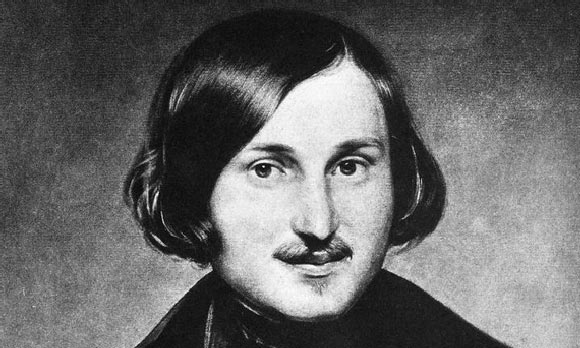
Nikolai Vasilievich Gogol was a Ukrainian-born Russian writer. He contributed to Russian literature through his magnificently crafted dramas, novels and short stories. He was one of the major proponents of the natural school of Russian literary realism. His notable works include Evenings on a Farm Near Dikanka, The Government Inspector and “The Portrait”.
Born on March 31, 1809 in Sorochyntsi, Poltava Governorate, Ukraine, Gogol was raised by a Polish mother and an amateur Ukrainian playwright and poet father. His family spoke both Russian and Ukrainian. From a very young age Gogol developed a keen interest in Ukrainian-language plays and helped his uncle stage them. His father died when he was fifteen. During 1820’s, Gogol received education from higher art school in Nizhyn. It is here that he learned the art of writing and practiced his skills. He became an outcast in his class and his fellow students called him a “mysterious dwarf”. Such incidents engendered a situation for him to embrace his dark side secretly.
Upon completion of his studies, Gogol moved to St. Petersburg to join civil service. His lack of wealth and social connections made him realize that in order to attain a respectable job he would have to work hard. He had already penned a Romantic poem on German idyllic life, titled Hans Küchelgarten. He published it at his own expense, under the pseudonym V. Alov. As he met rejection and ridicule of the publishing magazine he destroyed all the copies of his poem in utter dejection. Later, he embezzled his mother’s money on a trip to Germany but eventually returned and became an underpaid government employee.
However, he became a preeminent figure in short story writing as he occasionally wrote for a periodical. The young storyteller achieved overnight success. He was endowed with great respect by twentieth century literary giants like Alexander Pushkin and Vasily Zhukovsky for his contributions. In 1834, he was offered position of a senior professor of medieval history at St. Petersburg University. Feeling ill-equipped for the job, he left after teaching a year long.
Gogol’s first collection of Ukrainian stories, Evenings on a Farm Near Dikanka, was published in 1931. It was followed by a number of volumes, one of them entitled Mirgorod. The subject matter of his stories varies sometimes from devils and witches to idyllic village life. His miscellaneous prose was published in a volume, titled Arabesques. The critics applauded his work for having a distinct Ukrainian voice. Gogol’s literary work highlighted the supposed difference between Ukrainian and Russian social aspects. His early prose was inspired by contemporary writers, such as Vasily Narezhny and Hryhory Kvitka-Osnovyanenko. Still his work had a distinctive quality that is his use of unconventional and sophisticated satire. Moreover, the colloquial nature of the prose became a breath of fresh air in Russian literature.
The second volume, Arabesques brings out the realism as it shows a romantic’s struggle to expose the evil and duplicity of the world that he can neither embrace nor evade. Gogol’s highly acclaimed satirical play, The Government Inspector, is a comedy of errors. It draws attention to politically corrupt Imperial Russia by underlining human attributes, like greed and foolishness. Gogol is held in esteemed regard for constructing original work that avoids clichéd sympathetic characters and love interest. Another of one of his play, Dead Souls, lampoonsthe double-standards of Imperial Russia. Afterwards, his creative genius took a sudden nosedive and eventually deserted him. He died on 4 th of March, 1852 after burning up some of his manuscript and refusing to eat food.
Биография Николая Гоголя на английском языке
Здесь вы можете прочитать биографию Николая Гоголя на английском языке.
 Nikolai Vasilievich Gogol was born on 20 March 1809 in the village of Sorochyntsi. It was situated in Poltava Governorate of the Russian Empire. Now this territory belongs to Ukraine. The ancestors of Gogol’s mother were Polish landowners. It is known that his father, Vasily Gogol-Yanovsky, composed poetry both in Russian and Ukrainian. He died when Nikolai was fifteen years old. The whole family spoke both Ukrainian and Russian. When Nikolai was a child he helped his uncle with various plays in his home theater.
From 1820 to 1828 Gogol studied at a school of higher art which was located in Nizhyn. At that time he started to write. Gogol did not have many friends at school and some of his classmates called him “mysterious dwarf”. At the same time two or three of his schoolmates became his close friends.
At an early age Gogol developed taciturn temperament which was expressed by distressing self-consciousness and infinite ambition. He additionally developed a faculty for mimicry. Consequently Gogol became an incomparable reader of his writings and had an idea to be an actor.
In 1828 he left the school and moved to St Petersburg. Gogol dreamt of being literary celebrity and brought with him a poem Hans Kuchelgarten. It was later published entitled “V. Alov”. Gogol sent his work to different magazines but most of them ridiculed it. Afterwards he bought all the magazines and destroyed them. After that Gogol swore that he’d never begin writing again.
In 1831Gogol presented Ukrainian stories (Evenings on a Farm Near Dikanka). This work was a great success. In a year he presented the second volume of these stories. In 1835 two volumes were in the collection of stories called Mirgorod. During this time Russian critics saw in Gogol the emergence of a Ukrainian, rather than Russian. Afterwards his writings were used for illustrating differences between Ukrainian and Russian national characters. At the same time Gogol became interested in Ukrainian history. He tried to get a job at the history department at Kiev University. The Russian minister of education and Pushkin tried to help him but eventually Gogol couldn’t obtain an appointment at this university.
Gogol’s interest in history was an incitement to him to write a fictional story Taras Bulba where he described Ukrainian Cossacks. At this time Gogol became friends with Mykhaylo Maksymovych who was a naturalist and historian. In 1834 he became Professor of Medieval History at the University of St. Petersburg.
From 1832 to 1836 Gogol worked hard and during this time he was in touch with Pushkin. In April 1836 he presented his comedy The Government Inspector (Revizor). This work was an enormous success and after this event other Russian critics such as Vissarion Belinsky and Stepan Shevyrev reclassified Gogol from a Ukrainian to a Russian writer.
Between 1836 and 1848 Gogol travelled abroad. His tour included a visit to Switzerland, Germany, France, Italy and other countries. In the winter of 1836-1837 Gogol stayed in Paris where he was in touch with Polish exiles and Russian expatriates. He spent a lot of time with the Polish poets Bohdan Zalesky and Adam Mickievicz. Gogol finally moved to Rome where he spent most of his twelve years from 1836. He became interested in Italian literature, opera and art. In 1838 Gogol made the acquaintance of Count Ioseph Vielhorskiy who was 23 years old. He suffered from tuberculosis and Gogol tried to help him but Vielhorskiy died in a year.
In 1837 Pushkin died and this event made a lasting impression on Gogol. After Pushkin’s death his main work was the satirical epic Dead Souls. At the same time Gogol amended The Portrait and Taras Bulba. Moreover he wrote the second comedy Marriage (Zhenitba) and started working on his noted short story, The Overcoat.
In 1841 Gogol completed the first part of Dead Souls and brought it to Russia. This work was presented in 1842. The censorship insisted on renaming of the book. Eventually it was entitled The Adventures of Chichikov. This work made Gogol famous.
Gogol spent his last years travelling throughout the country. He also spent a lot of time with his friends such as Osyp Bodiansky, Sergei Aksakov, Maksymovych and others. His health declined. In February 1852 Gogol destroyed some of his manuscripts including the second part of Dead Souls. 9 days later he died. Gogol was buried in the Novodevichy Cemetery.
Nikolai Gogol was born in Sorochintsi, Ukraine, and grew up on his parent’s country estate. His real surname was Ianovskii, but the writer’s grandfather had taken the name «Gogol» to claim a nobel Cossack ancestry. Gogol’s father was an educated and gifted man, who wrote plays, poems, and sketches.
Gogol started write while in high school. He attended Poltava boarding school (1819-1821) and Nezhyn high school (1821-1828). In 1829 he mowed to St. Petersburg. Gogol worked at minor governmental jobs and wrote occasionally for periodicals. Between the years 1831 and 1834 he taught history at the Patriotic Institute and worked as a private tutor.
In 1831, Gogol met Aleksander Pushkin who greatly influenced his choice of literary material, especially his «Dikan’ka Tales», which were based on Ukrainian folklore. Their friendship lasted until the great poet’s death. In 1835, Gogol became a full-time writer.
Under the title «Mirgorod» (1835) Gogol published a new collection of stories. The book included the famous historical tale «Taras Bulba», which showed the influence of Walter Scott. The protagonist is a strong, heroic character, not very typical for the author’s later cavalcade of bureaucrats, lunatics, swindlers, and losers.
«St. Petersburg Stories» (1835) examined disorders of mind and social relationships. «The Nose» was about a man who loses his nose and which tries to live its own life. In «Nevski Prospect» a talented artist falls in love with a tender poetic beauty who turns out to be a prostitute and commits suicide when his dreams are shattered. «The Diary of a Madman» asked why is it that «all the best things in life, they all go to the Equerries or the generals?» «The Overcoat» contrasted humility and meekness with the rudeness of the «important personage».
Gogol published in 1836 several stories in Pushkin’s journal «Sovremennik» and in the same year appeared his famous play, «The Inspector General». It told a simple tale of a young civil servant, Khlestakov, who finds himself stranded in a small provincial town. By mistake, he is taken by the local officials to be a government inspector, who is visiting their province incognito. Khlestakov happily adapts to his new role and exploits the situation, but then arrives the real inspector.
Its first stage production was in St. Petersburg, given in the presence of the tsar. The tsar, as he left his box after the premiere, dropped the comment: «Hmm, what a play! Gets at everyone, and most of all at me!» Gogol, who was always sensitive about reaction to his work, fled Russia for Western Europe. He visited Germany, Switzerland, and France and settled then in Rome. He also made a pilgrimage to Palestine in 1848.
In Rome Gogol wrote his major work, «The Dead Souls». Gogol claimed that the story was suggested by Pushkin in a conversation in 1835. It depicted the adventures Pavel Ivanovich Chichikov, who arrives in a provincial town to buy «dead souls», dead serfs. By selling these «souls» with a cheaply-bought lands, Chichikov planned to make a huge profit. He meets local landowners and departs in a hurry, when rumours start spread about him.
Except for short visits to Russia in 1839-1840 and 1841-1842, Gogol was abroad for twelve years. The first edition of Gogol’s collected works was published in 1842. It made him one of the most popular Russian writers. Two years before his return, Gogol had published «Selected Passages from Correspondence with Friends» (1847), in which he upheld the autocratic tsarist regime and the patriarchal Russian way of life. The book arose disappointment among radicals who had seen Gogol’s works as examples of social criticism. In the play «Marriage» (1842) nearly everybody lies and the protagonist cannot make up his mind about marriage. He hesitates, agrees, then withdraws his promise.
In his later life Gogol came under influence of a fanatical priest, Father Konstantinovskii, and burned sequels for «Dead Souls», just 10 days before he died on the verge of madness on the 4th of March, 1852. Gogol had refused to take any food and various remedies were employed to make him eat. Rumors arise from time to time that Gogol was buried alive.
Николай Гоголь родился в Сорочинцах, на Украине, и рос в родительском загородном имении. Его настоящая фамилия Ивановский, но дедушка писателя взял фамилию «Гоголь», чтобы подчеркнуть свое благородное казацкое происхождение. Отец Гоголя был человеком образованным и талантливым, он писал пьесы, стихотворения и зарисовки.
Гоголь начал писать еще в школе. Он учился в школе в Полтаве (1819-1821) и в Нежине (1821-1828). В 1829 году он переехал в Санкт-Петербурге. Гоголь работал на второстепенных государственных должностях и время от времени писал для периодики. В период между 1831 и 1834 годами он преподавал историю в Патриотическом Институте и давал частные уроки.
В 1831 г. Гоголь встретился с Александром Пушкиным, который серьезно повлиял на писателя в выборе литературного материала, особенно — «Вечеров на хуторе близ Диканьки», основанных на украинском фольклоре. Их дружба продолжалась до смерти великого поэта. В 1835 Гоголь вплотную занялся писательской деятельностью.
Под названием «Миргород» (1835) Гоголь опубликовал новый сборник рассказов. В книгу вошла и историческая повесть «Тарас Бульба», в которой заметно влияние Вальтера Скотта. Главный герой — сильный, героический персонаж, не очень характерный для более поздних работ автора, где отображаются бюрократы, безумцы, плуты и неудачники.
В 1836 г. Гоголь опубликовал несколько рассказов в журнале Пушкина «Современник», в этом, же году выходит и знаменитая пьеса «Ревизор». В ней рассказывается история одного молодого чиновника, Хлестакова, который оказался в небольшом провинциальном городке без гроша. Местные чиновники по ошибке принимают его за государственного инспектора, который приехал в провинцию инкогнито. Хлестаков благополучно вживается в свою новую роль и пользуется ситуацией, но тут приезжает настоящий ревизор.
Первая постановка «Ревизора» прошла в Санкт-Петербурге в присутствии царя. После премьеры царь, выходя из ложи, сказал: «Гм, что за пьеса! Всех высмеивает, и более всех — меня!». Гоголь, который всегда был очень чувствителен к отзывам о своем творчестве, уехал из России в Западную Европу. Он побывал в Германии, Швейцарии и Франции, а затем поселился в Риме. Он также совершил паломничество в Палестину в 1848 г.
В Риме Гоголь написал свою главную книгу — «Мертвые души». Гоголь утверждал, что идею написания этой книги ему предложил в 1835 году в беседе Пушкин. В книге рассказывается об авантюристе Павле Ивановиче Чичикове, который приехал в провинциальный городок, чтобы купить «мертвые души» — умерших крепостных. Продавая эти «души» и земли, которые были дешево куплены, Чичиков планировал получить огромную прибыль. Он встречается с местными землевладельцами и немедленно уезжает, когда о нем начинают распространяться слухи.
Не считая недолгого пребывания в России в 1839-1840 и 1841-1842 годах, Гоголь прожил за рубежом 12 лет. Первое издание сочинений Гоголя было опубликовано в 1842 г. Эта книга сделала его одним из самых популярных писателей России. За два года до своего возвращения в Россию Гоголь издал «Избранные отрывки из переписки с друзьями» (1847), где поддерживал царское самодержавие и патриархальный жизненный уклад России. Книга вызывала разочарование радикалов, которые видели в произведениях Гоголя образец социальной критики. В пьесе «Женитьба» (1842) почти все врут, и главный герой не может определиться с женитьбой. Он колеблется, соглашается, потом изменяет свое решение.
В последние годы жизни Гоголь находился под влиянием священника отца Константиновского. Он сжег продолжение «Мертвых душ» за десять дней до своей смерти, 4 марта 1852 года, находясь на грани безумия. Гоголь отказывался принимать пищу, его пытались кормить насильно. До сих пор появляются слухи о том, что Гоголя похоронили живым.